Remember the thrill when Google first placed a universe of answers at everyone’s fingertips? Within a matter of seconds, obscure facts — like the heart of a blue whale being large enough for a person to swim through, or Australia spanning wider than the moon — became accessible knowledge. Search engines turned the curious into instant experts and settled countless coffee-shop and inuman/drinking debates with a few keystrokes. Information, knowledge, and data became readily available at our literal fingertips: With one search query, you get immediate answers.
Social media shifted that landscape. Instead of actively hunting for information, audiences began absorbing it passively through algorithm-curated feeds. Headlines and hot takes rose to prominence not because they were necessarily correct, but because they were frequently shared or engaged with, or adjudged to be particularly provocative by an opaque algorithm that sought to maximize our dopamine circuits. What happened? Repetition bred credibility, and popularity became a proxy for truth. After all, if hundreds of people one “knew” believed something to be true, who were we to argue?
Influencers further shifted this dynamic. Armed with charisma and production savvy, they blended entertainment, advertising, and advocacy into short, compelling 15s clips and highly-curated photographs. We were entertained — and effortlessly nudged toward the laundry soap they endorsed, the laptop they unboxed, the worldview they championed. A single tap on TikTok Shop and their recommendation slid into our shopping carts and into our homes after a few days. Somewhere along the way, we began to assume that a large number of followers and a well-crafted social media presence were shorthand for credibility, and that popularity equaled expertise and trustworthiness.
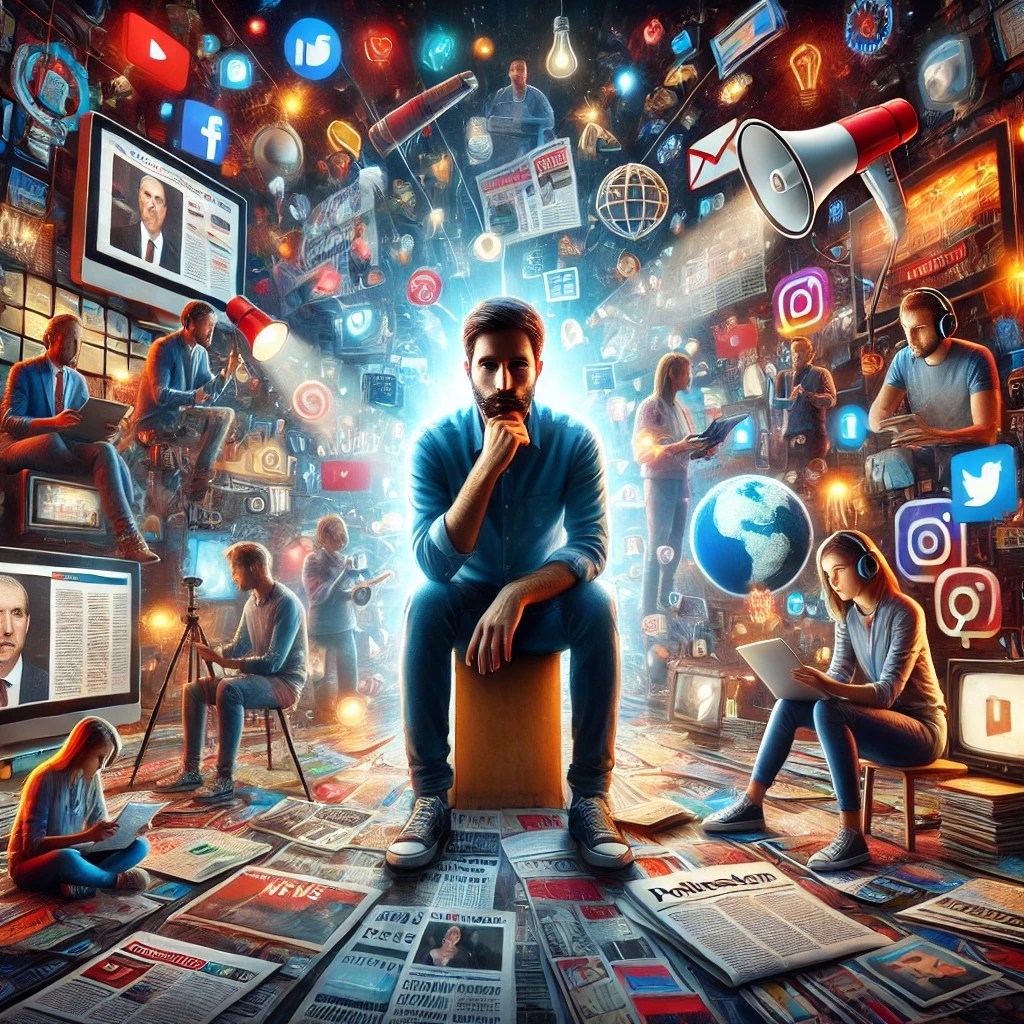
The impact to us as audiences was subtle but profound: Our own skepticism went on autopilot. This is the trade-off for this convenience and this desire to be entertained and to be always be informed: A gradual erosion of skepticism and the capacity to truly investigate and deeply dive into important issues. As voices grow louder and content becomes more persuasive, the audience’s role shrank from active evaluator and participants to the media-audience exchange to passive media and content consumers. In a society like the Philippines where social platforms double as town square, marketplace, and newsroom, outsourcing judgment to algorithms and personalities is more than a personal habit; it is a civic vulnerability.
On a macro-level, the impact on society is bigger and mores significant, however. False cures trend and get shared across social media accounts before physicians and scientists can debunk them. Political narratives harden into dogma within hours of being dropped into social media feeds and in group chats before they can be dissected and analyzed deeply. Deep-fake videos and AI-generated images and videos blur the line between reality and spin , especially on fast-moving platforms such as TikTok and X where misinformation and disinformation already flourish.
All these are making me think that we need to re-instill critical thinking in society.
We need to start teaching everyone in our society to ask deeper questions about the information and content that they see online: How do you know it is true? What is the source — and is the source really credible? If this were true (or false), who benefits and do they have a hand in the dissemination of the news itself? Has the information been corroborated independently by others? Has the source been truthful in the past? What happens if these were not true — what are the implications?
Rebuilding a culture of critical thinking demands deliberate effort. It means pausing before sharing a headline, tracing information back to its primary source, seeking out dissenting views, and resisting the urge to treat virality as verification. It also means cultivating media literacy in the next generation, whose formative years are unfolding inside an attention economy designed to monetize distraction.
The path forward is clear: Reclaim the habit of questioning, weighing, and deciding on evidence rather than on the charisma of a messenger or the popularity of a name. A society guided by facts is not just healthier — it is essential for meaningful democracy and sustainable progress.
None of this is quick, but all of it is urgent. A society that interrogates evidence rather than applauds applause is harder to manipulate, harder to divide, and far better equipped to solve the challenges that actually matter — climate change, poverty, inequality, diversity, economic and technological disruptions. Critical thinking is not a nostalgia project for pre-digital days; it is the operating system upgrade that Philippine democracy and progress now require.
 Numerate Geek
Leave a comment