In my work analyzing societal trends for marketing and advertising clients, I keep encountering a psychological phenomenon that is quietly reshaping how people relate to one another: The parasocial relationship.
At its core, a parasocial relationship is a one-sided bond where a media consumer feels a deep, personal connection with a performer — usually an influencer, content creator, or vlogger — despite the performer having no idea the consumer exists or having no regard to these consumer-viewers.
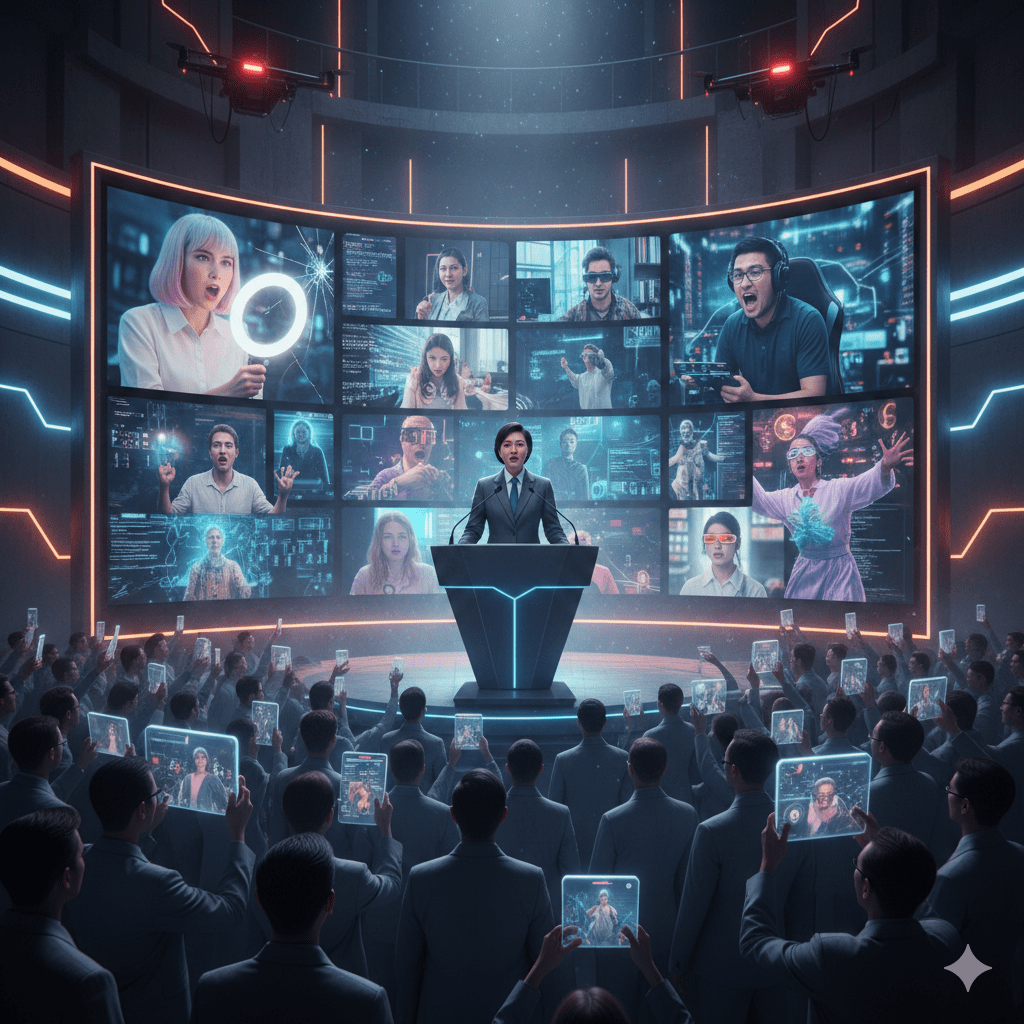
To a strategist, this is not just a “fan” dynamic. It is the commodification of intimacy and authenticity. By sharing their morning coffee, their marital arguments, and their “authentic” struggles, influencers create what I would call a “friendship filter” that bypasses our natural skepticism. We are not just watching a broadcast. We are participating in a simulated companionship that feels as real as a conversation with a neighbor.
On the surface, these relationships are not inherently problematic. In fact, they can offer genuine social value. In many parts of the world — particularly in the West — researchers and public health officials have begun describing what they call an “epidemic of loneliness”. The U.S. Surgeon General declared it a public health crisis in 2023, and the World Health Organization followed by naming it a global public health concern just months later. Even in countries like the Philippines, where extended family structures and strong community ties have traditionally offered a buffer, the pressures of urbanization, digital displacement, and shifting social and economic structures are beginning to push that conversation into our own backyard. In that context, a relatable vlogger can function as a “digital anchor” for someone in a remote province or anyone feeling marginalized — offering comfort and a sense of belonging and community that their immediate physical environment might not provide. From a marketing perspective, this bond is also the ultimate trust shortcut, allowing hyper-niche communities to form and gives micro-entrepreneurs a way to bypass traditional gatekeepers, genuinely democratizing the path to financial mobility for those willing to build a personal brand.
However, the costs of this phenomenon become clear when you look beneath the surface. For the follower, parasocial relationships can act like social junk food — satisfying the urge for connection without providing the nutrients of reciprocity and real-world friction. Because these relationships ask nothing of us, we risk what some researchers informally describe as social atrophy: the gradual erosion of our patience for the demands of actual human friendships, which require compromise, vulnerability, and occasional discomfort. That is a slow and quiet kind of damage, and it is easy to miss precisely because the alternative feels so effortless.
There is also the question of what the “influencer path” actually looks like in practice for people who try to walk it. The data is interesting and sobering. According to a 2023 survey of more than 2,000 creators by influencer marketing agency NeoReach, nearly half of all content creators earn $15,000 or less per year from their work, and fewer than one in three make what could reasonably be called a livable income. The odds of reaching the lifestyle that influencer culture puts on display are far longer than most aspiring creators realize. For people in lower economic brackets, in particular, the influencer path is often framed as a shortcut to financial freedom, when the reality is closer to a high-effort gamble with poor odds. It risks creating what I would describe as a broadcaster society: Everyone performing, very few actually building.
The true danger, however, lies in how these parasocial bonds are deliberately weaponized to dismantle the concept of shared truth. As researchers Jason Vincent A. Cabañes and Fernando A. Santiago, Jr. point out in their 2023 ISEAS study on how Filipinos — particularly the precarious middle class — consume digital disinformation, producers of fake news have strategically “portrayed digital influencers and online vloggers as authentic and ‘for the people’” while exploiting mainstream journalism’s admitted shortcomings to cast it as “irredeemably biased and elitist”. This is not an accident. It is a calculated strategy. And it works precisely because of the parasocial trust that has already been built.
When we view a vlogger as our Kuya (big brother) or Ate (big sister), we do not want to fact-check them. Instead, we defend them. The relationship feels personal, and an attack on our favorite content creator can feel like an attack on a friend. This is what turns followers into a volunteer public relations army — people who are susceptible to propaganda not because they are naive, but because the lie is being delivered by someone who feels like family. When we delegate our critical thinking to a relatable screen personality, we do not just lose our objectivity. We lose our ability to participate in a shared, fact-based reality. And that, in a society trying to hold itself together, is not a small thing.
What makes this particularly difficult to address is that the parasocial bond feels like a solution to real problems. Loneliness is real. The desire for belonging is real. The frustration with institutions — including mainstream media — is real and often justified. Influencers do not manufacture these feelings; they simply know how to meet them. The problem is that meeting a need and genuinely addressing it are two very different things. Social junk food fills you up temporarily. It does not nourish you. And a steady diet of it eventually leaves you less equipped to seek out the harder, messier, more rewarding connections that actually sustain people over time.
I do not think the answer is to dismiss influencer culture or to tell people to simply stop forming these attachments — that would be not realistic nor fair. What I do think is that we need to be more honest, as a society, about what we are consuming and why.
For followers, that means developing the habit of asking whose interests are being served when a vlogger takes a strong position on something.
For marketers and strategists, it means understanding that the trust we tap into when we work with influencers carries a bigger responsibility we cannot afford to take lightly.
And for all of us, it means remembering that the most important relationships in our lives — the ones that actually carry us through in life — are the ones that require something of us in return; after all, there is no such thing as a free lunch in life.
And if the product, content, or entertainment is free, the product is — us.
 Numerate Geek
Leave a comment